
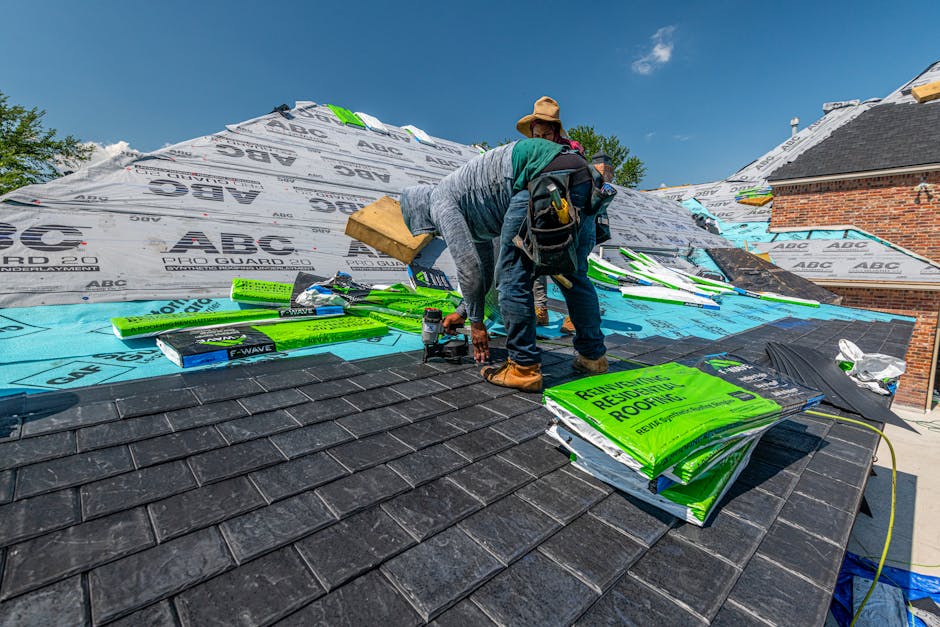
Underlayment is the hidden layer between your decking and your shingles (or metal panels) — and it determines how your roof performs when the surface fails. A modern Florida roof installed with high-quality synthetic underlayment and a secondary water barrier survives storm conditions that would catastrophically leak through an older roof using basic felt. This guide explains what underlayment is, what types are used in Florida, why it matters more than most homeowners realize, and how to know when yours needs replacement.
What Underlayment Does
Underlayment serves three functions, in roughly this order of importance:
- Water resistance. When shingles fail (lift, crack, or are torn off by wind), underlayment is the secondary barrier that keeps water out of the decking and attic. A storm that lifts shingles for an hour can deliver gallons of water onto the underlayment — which either holds or doesn’t.
- Decking protection during installation. Roofs sit exposed between tear-off and shingle installation. Underlayment protects the decking from rain in that window. Florida summer storms appear with little warning, so an underlayed deck is the only safe overnight state.
- Wind uplift resistance. Properly installed underlayment with adequate fastening contributes to the roof assembly’s overall wind rating. It is part of the chain that determines whether the roof survives hurricane gusts.
A roof’s storm resilience is determined more by underlayment quality than by shingle quality. A premium shingle over cheap felt fails earlier than a mid-tier shingle over high-quality synthetic underlayment.
The Three Types of Underlayment Used in Florida
Felt (Asphalt-Saturated Paper)
Traditional underlayment, used for decades. Heavy paper saturated with asphalt, rolled out and stapled or nailed onto the decking.
- Strengths: Cheapest material, widely available, familiar to all installers
- Weaknesses: Tears easily, degrades in UV exposure if left uncovered, becomes brittle over decades, low-temperature performance is poor
- Lifespan in Florida: 15-20 years before significant degradation
- Where it’s appropriate: Lower-budget re-roofs where lifespan is not a primary concern; not generally recommended for new construction in Florida
Synthetic Underlayment
Modern polyethylene/polypropylene plastic underlayment. Lightweight, much stronger than felt, UV-stable for longer periods of exposure.
- Strengths: Tear-resistant, walkable when wet, long UV exposure window during install delays, much longer service life than felt
- Weaknesses: Higher cost than felt; quality varies between manufacturers
- Lifespan in Florida: 25-40 years (often outlasts the shingle layer above it)
- Where it’s appropriate: Standard recommendation for almost any Florida re-roof or new construction
Peel-and-Stick Membrane (Self-Adhered)
Adhesive-backed waterproof membrane. Typically used as a secondary water barrier (SWR) — applied over the entire decking, sealing every nail penetration as fasteners pass through.
- Strengths: Truly waterproof; self-seals around nails; required for Florida wind mitigation credit
- Weaknesses: Higher cost; requires clean dry decking for proper adhesion; not appropriate as the sole underlayment under all roofing types
- Lifespan in Florida: 30-50 years
- Where it’s appropriate: As SWR on any roof where wind mitigation discounts matter (effectively all Florida homes); as primary underlayment under metal roofs and certain other systems
The current best practice in Florida is peel-and-stick SWR across the entire deck, with synthetic underlayment over it — or peel-and-stick alone in specific high-performance applications.
Why Underlayment Matters More in Florida
Three Florida conditions make underlayment quality particularly important:
Hurricane Performance
In hurricane wind events, shingles can lift, tear, or be torn off entirely. The underlayment is what stands between that surface failure and interior damage. A modern peel-and-stick SWR turns “shingles blown off” from a catastrophic interior flood into a roofing repair that doesn’t damage the home below. This is one reason Florida insurance carriers offer meaningful premium discounts for documented SWR installation — see Florida hurricane roof mitigation tax credits and insurance discounts for the discount specifics.
Summer Rain Volume
Florida summer thunderstorms regularly deliver 1-3 inches of rain in under an hour. A roof with marginal shingle coverage and degraded underlayment cannot keep that water out — the volume overwhelms whatever surface defects exist. A roof with intact underlayment handles it without interior consequence.
Sun and Heat Exposure
Florida’s UV and heat cycles age every roofing layer faster than in northern climates. Felt underlayment becomes brittle and cracks within 15-20 years of installation, even with shingles covering it. Synthetic underlayment holds up much better — the spec choice has a 15-20 year lifespan difference, not just a quality difference.
When Underlayment Needs Replacement
Underlayment is replaced when the roof is re-roofed — it is not a standalone replaceable item. You cannot replace the underlayment without removing the shingles or panels above it.
The decision points:
During Planned Re-Roof
When the existing roofing material is being replaced, the underlayment underneath is replaced as part of the same project. This is the natural and most economical time to upgrade from old felt to modern synthetic + SWR. The incremental cost of better underlayment is small compared to the project total and the lifespan benefit is decades.
A bid for roof replacement that quietly specs the cheapest felt underlayment is leaving substantial long-term value on the table. Specify peel-and-stick SWR plus synthetic underlayment in writing in the bid.
After Storm Damage
A storm that does enough damage to require partial or full re-roofing also exposes the existing underlayment. If the underlayment is old, brittle, or torn during tear-off, replace it as part of the repair. Don’t try to save it.
When Considering an Overlay
Adding new shingles over existing shingles (“roof overlay”) is sometimes legally permitted but rarely a good idea — and one major reason is the underlayment. The original underlayment underneath is now sealed in and cannot be inspected or replaced. Any damage to it is locked in for the life of the new overlay. Florida humidity makes this particularly risky.
How to Verify Quality Underlayment Was Installed
You will not see the underlayment after the roof is finished — but several documents and details verify what was installed:
- Material delivery receipts should specify the underlayment brand and product line
- Photo documentation during tear-off and underlayment installation (request this — any quality roofer takes these)
- Manufacturer warranty registration for the specific underlayment product (peel-and-stick warranties are separate from shingle warranties)
- Wind mitigation inspection form (OIR-B1-1802) — the SWR section confirms whether peel-and-stick membrane was installed and qualifies for the insurance credit
If a contractor cannot or will not document the underlayment specifically, that itself is information.
What Happens When Underlayment Fails
Aging underlayment doesn’t announce itself. The most common scenarios:
- A storm passes through, shingles hold up but the underlayment couldn’t keep up with brief water intrusion → unexpected ceiling stains the next day
- A small surface issue (cracked pipe boot, lifted shingle) lets water through to underlayment that is too brittle to redirect it → slow leak that takes weeks to manifest as interior damage
- Old felt finally degrades to the point where any moisture penetrates straight to the decking → decking damage accelerates and shortens roof life
These failures often look like shingle failures but actually originate at the underlayment layer. A roofer who attributes recurring leaks to “shingles needing replacement” without considering underlayment age may be selling the wrong fix.
For ongoing leaks, roof leak detection by a specialist can localize the actual entry point and identify whether the issue is shingles or what lies beneath them.
Frequently Asked Questions
How much more does synthetic underlayment cost vs. felt?
Synthetic underlayment costs more per roll, but the installed cost difference on a typical residential re-roof is a modest fraction of the total project — usually a few hundred to about a thousand dollars on a typical home. The lifespan extension and wind performance benefits exceed this gap easily.
Does peel-and-stick membrane cover the whole roof or just edges?
Both configurations exist. For Florida wind mitigation credit, the SWR must cover the entire deck — not just edges, valleys, or eaves. Edges-only coverage doesn’t qualify. Specify full-deck SWR in the bid if you want the credit.
Can I tell from inside the attic what underlayment was used?
Sometimes — the underside of the decking visible from the attic doesn’t show underlayment directly, but you can sometimes see staple/nail penetrations or the underlayment material at edges or transitions. Generally though, the install documentation is the more reliable source.
Will good underlayment let me skip insurance for the roof?
No — insurance is required and good underlayment lowers risk and (with documentation) lowers premiums via wind mitigation credits. It is a complement to coverage, not a replacement.
Specify Underlayment Explicitly
When getting roofing bids, specify underlayment type and brand in the project scope. Quality differences are real and the cost gap to do it right is small. Steel Rudder specs synthetic underlayment plus peel-and-stick SWR as the default on Florida residential re-roofs, with documentation that supports both the manufacturer warranty and the insurance wind mitigation credit. Service areas include Orange Park and Mandarin.