
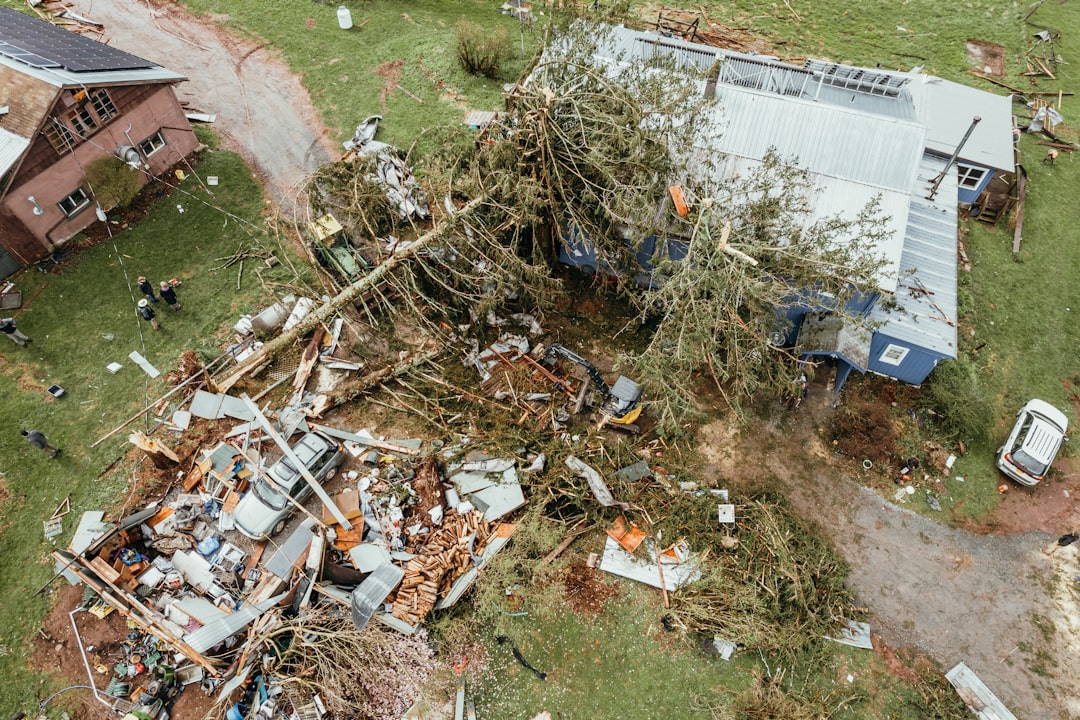
A storm damage roof insurance claim is won or lost in the first 72 hours. Documentation collected immediately after damage is the evidence that determines whether the carrier pays for a full replacement, a partial repair, or denies the claim entirely. Most Florida homeowners under-document, miss filing deadlines, or accept the carrier’s first offer without challenge — and leave thousands of dollars on the table. This guide walks through what to do in the first hours, the first week, and the first month after roof damage, in the order it actually matters.
The First 72 Hours: Documentation
Insurance carriers are looking for two things when evaluating a claim: proof the damage was caused by the covered event, and proof the damage was not pre-existing. Both questions are answered by documentation captured immediately.
Photograph Everything
Take wide and close photographs of every damaged area from multiple angles. Cover:
- Exterior roof damage from ground level (every elevation) and, if safely accessible, from a vantage point above (a neighbor’s second-story window, a drone if you have one)
- Interior damage — water stains, dripping, sagging ceiling, damaged drywall, ruined personal property
- Debris on the property — tree limbs, blown-in roofing material, hailstones (place a coin next to hail for scale, then refrigerate one for later evidence)
- Surrounding damage — neighboring properties, downed trees, debris path, anything that establishes the scope and direction of the storm
Date and time-stamp every photo. Modern phones embed this in the file metadata automatically — do not strip it.
Prevent Further Damage (And Document That You Did)
Insurance policies require the homeowner to mitigate further damage. If water is actively entering, tarp the roof or call for emergency roofing response. Photograph the temporary fix and keep every receipt for tarps, plywood, contractor labor — these costs are reimbursable, and failing to mitigate can reduce the eventual payout.
Do not, however, make permanent repairs before the carrier’s adjuster has inspected the damage. Temporary stops yes; permanent fixes no. The carrier needs to see the damage as the storm left it.
Save Storm Evidence
Beyond your property:
- Local weather reports from the National Weather Service or NOAA showing storm conditions on the date of damage
- News coverage of the storm in your area
- Neighborhood damage reports — community Facebook groups, news interviews, NextDoor posts establishing widespread damage
This contextualizes your claim. A roof claim filed after a documented tornado is harder to question than a roof claim filed on a sunny Tuesday.
The First Week: Filing the Claim
Most Florida homeowner’s policies require notification of intent to file a claim within a specific window — often as short as 72 hours, sometimes up to 14 days. Read your policy or call your carrier directly to confirm your specific timeline.
Filing Steps
- Call the carrier’s claim line (saved in your phone before storm season, if you followed pre-storm planning). Get a claim number; everything else attaches to it.
- Provide the date of loss — the day the damage occurred, not the day you noticed it
- Describe the damage briefly — facts only, no speculation about cause beyond “storm damage”
- Schedule the adjuster inspection — push for the earliest available date; carriers are slammed after major storms and adjuster availability deteriorates quickly
- Request a copy of your policy if you do not have one — specifically the dec page, the hurricane deductible, the roof age clauses, and any documentation requirements
Do not give a recorded statement until you have reviewed your documentation. Carriers may request one early; you can request to schedule it after the adjuster’s visit when you have the full damage picture.
Get a Contractor Inspection in Parallel
While the claim is filed, schedule an independent contractor inspection. Steel Rudder and most reputable roofers offer free or low-cost post-storm assessments specifically for insurance claim documentation. The contractor produces a written damage report with photographs that becomes evidence supporting your claim.
The contractor inspection often catches damage the homeowner missed and helps establish whether the damage warrants full replacement versus partial repair. If your existing pre-storm inspection (the one I keep recommending in every Florida roofing article) is on file, the before/after comparison is the cleanest possible claim evidence.
The Adjuster Visit: How to Run It
The adjuster’s inspection is the single most important moment in the claims process. The number they put on the assessment becomes the baseline for the entire negotiation. Prepare accordingly.
Be Present
Do not leave the adjuster to inspect alone. Be present, take notes, photograph what they photograph, and ask questions. Specifically:
- “Are you measuring the damage area?” — the square footage of damage drives the cost estimate
- “Are you noting the roof’s pitch and complexity?” — both affect labor cost in the estimate
- “Are you accounting for matching shingles?” — discontinued or weathered shingles often require full-slope replacement to match, which is reimbursable under most policies
Bring Your Documentation
Hand over (or share digitally) every photograph, the contractor inspection report, your pre-storm documentation if any, and any receipts for emergency mitigation. The adjuster’s job becomes easier with organized evidence, and the assessment usually comes back higher.
Do Not Sign Anything On the Spot
The adjuster may present an initial assessment or a settlement offer at the end of the visit. Do not sign. Take it home, review it against your contractor’s estimate, and respond in writing.
After the Assessment: Negotiating the Payout
The carrier’s initial offer is rarely the final offer. The negotiation depends on having a contractor estimate that exceeds the carrier’s estimate, with documented justification for the difference.
Common reasons the contractor estimate exceeds the carrier estimate:
- Code upgrades. Current Florida building codes require things that older roofs do not have (e.g. secondary water barriers, specific underlayment, hurricane-rated fasteners). If the roof has to be brought to code during repair, that cost is reimbursable under most policies.
- Matching requirements. As above, shingle matching often requires full-slope or full-roof replacement, which the initial adjuster estimate may not include.
- Decking damage. Damage visible only after tear-off. Add the contingency line.
- Pricing differences. Carriers use software estimates (often Xactimate) at default pricing; local labor and material costs can exceed those defaults, especially in the post-storm rush.
Submit the contractor estimate in writing with a request to reopen the assessment. Be polite, factual, and persistent. Many carriers approve increased payouts when challenged with specific documented justifications.
If the carrier refuses, your options include:
- Reinspection request with a different adjuster
- Public adjuster — a licensed independent adjuster who works for you, typically on contingency (10-20% of recovered claim amount)
- Appraisal clause invocation — many policies allow either party to demand a binding appraisal process when claim values are disputed
Roofing insurance claim assistance from an experienced roofer often resolves the contractor-vs-carrier estimate gap without escalation, because the roofer can document the basis for each line item in the language carriers respond to.
Mistakes That Reduce Payouts (Or Get Claims Denied)
The most common reasons Florida storm damage claims pay less than they should:
- Missing the notification deadline. File timely even if you don’t yet know the full extent of damage; you can supplement the claim later.
- Permanent repairs before the adjuster visit. Removes the evidence the adjuster needs to assess fairly.
- Accepting the first offer without challenge. It is almost always low.
- No pre-storm documentation. Without it, the carrier can argue damage was pre-existing.
- Signing AOB (Assignment of Benefits) to a contractor without understanding it. AOB transfers your claim rights to the contractor; some are reputable but some are not, and Florida’s AOB rules changed significantly in 2024 — read carefully and consider consulting independent advice before signing.
- Roof age denial. Many Florida carriers limit coverage or move to actual-cash-value (depreciation deducted) for roofs over 15-20 years old. Know your policy’s terms before you need them.
Frequently Asked Questions
How long do I have to file a roof insurance claim in Florida?
Florida law currently sets the maximum window at one year from the date of loss for new claims, with shorter notification windows often required by individual policies (commonly 72 hours to 14 days). Check your specific policy — the policy window is usually shorter than the legal maximum.
Will filing a claim raise my premiums?
Possibly. Most carriers do raise premiums after a claim, though Florida has restrictions on rate increases tied to single-event claims (especially named-storm claims). Weigh the expected payout against potential premium increases, but generally if the damage is real and significant, file the claim.
What if my carrier denies my claim?
Request the denial in writing with specific reasons. Most denials cite either policy exclusions, missed deadlines, or “pre-existing damage.” Each can be challenged — the first two with documentation, the third with photographic and inspection evidence. A reinspection or public adjuster engagement is often successful.
Should I hire a public adjuster?
For straightforward claims under a few thousand dollars, usually not — the contingency fee eats too much of the recovery. For larger claims, disputed claims, or any claim where you feel out of your depth in the negotiation, a public adjuster typically recovers more than enough to justify the fee. Verify the adjuster’s Florida license before signing anything.
Get Storm Damage Roof Assistance
Insurance claims are stressful and the rules favor the carrier in dozens of small ways. Steel Rudder works on storm damage roof repair and the insurance-claim documentation that goes with it across the Jacksonville metro, including Atlantic Beach and Neptune Beach. The earlier the documentation starts, the better the claim outcome — call as soon as the storm has passed and it is safe to assess.