
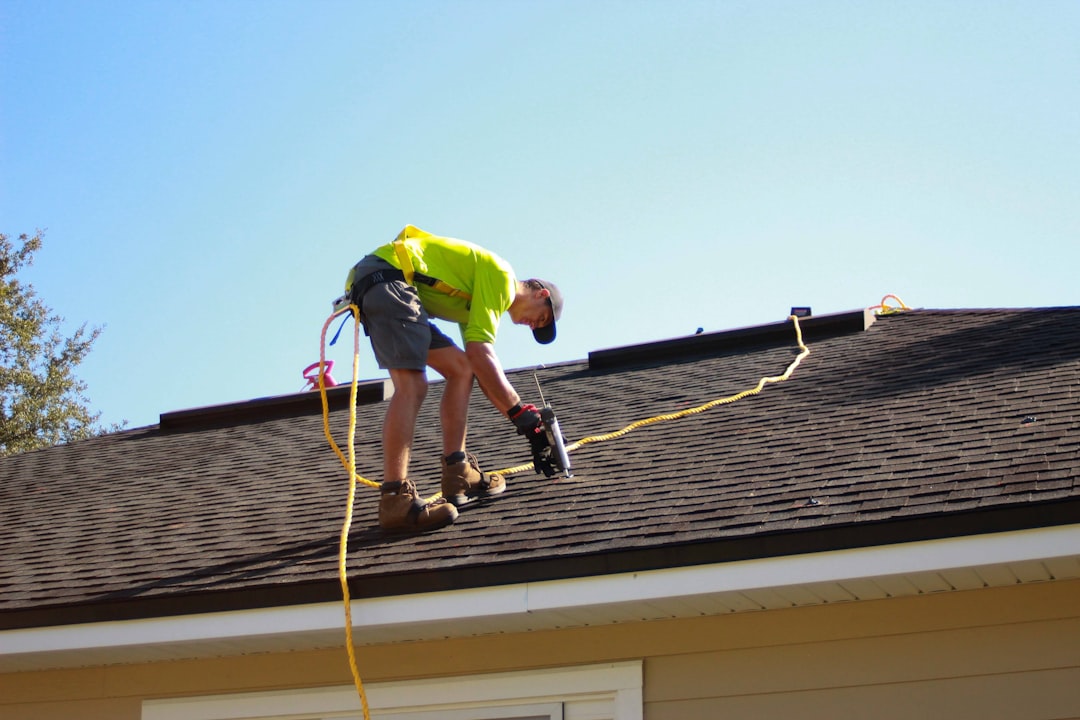
Most commercial roof failures in Florida are not material failures — they are maintenance failures. A 20-year-rated membrane that nobody inspects fails at 12. A 20-year-rated membrane on a quarterly inspection schedule routinely lasts 25-30 years and avoids the emergency-leak callouts that destroy property management budgets. This checklist gives property managers a quarterly cadence that catches the small problems before they become $50,000 repairs.
Why Quarterly, Not Annually
The standard “inspect twice a year” rule is a residential heuristic. Commercial roofs in Florida need quarterly inspections for three reasons:
- More penetrations. A commercial roof has HVAC curbs, vents, drains, pipe boots, parapet flashings, and equipment supports — each one a potential leak point. The probability that something needs attention in any given quarter is high.
- Heavier weather exposure. Florida averages ~13 inches of rain in the wet season alone, plus regular tropical systems. Damage accumulates faster than annual inspections can catch.
- Insurance and warranty terms. Most commercial roof warranties and many commercial property policies require documented periodic inspections. Skip them and you lose coverage for issues that the inspection would have surfaced.
A quarterly schedule splits naturally into pre-summer (April), post-summer (October), and two interstitial check-ins (January, July).
The Quarterly Checklist
Every quarterly inspection, walk the entire roof and check the following in order. Document findings with photos and date stamps so the inspection log can support an insurance claim later.
1. Drainage
- Drain strainers — clear of leaves, debris, and bird nests. A clogged drain causes ponding, which destroys the membrane.
- Scuppers — open and flowing freely. Test by running water if rain is not in the forecast.
- Gutters and downspouts (if present) — secured, unblocked, and routing water away from the foundation.
- Ponding areas — note any standing water 48+ hours after rain. Ponding indicates either a clogged drain, a settled deck, or undersized drainage. All three are fixable; ignoring them is not.
2. Membrane Surface
- Punctures and tears — walk slowly, look for sharp objects (dropped tools, broken HVAC parts, vandalism). Mark any membrane damage for immediate repair.
- Blistering — bubbles in single-ply membrane usually indicate moisture trapped under the surface. Small blisters can be patched; large ones often signal larger saturation issues that need investigation.
- Seam separation — heat-welded TPO seams should be continuous and tight; check for any lifted or open seams, especially at corners and around penetrations.
- Granule loss (on modified bitumen) — bare patches on the granular surface accelerate UV damage to the underlying bitumen. Spot-patch with surface coating.
- Chalking and fading (on coated systems) — cosmetic at first, but indicates the protective coating is wearing thin. Schedule recoating before the underlying membrane is exposed.
3. Flashings and Penetrations
Penetrations are where commercial roofs leak. Inspect every one:
- HVAC curbs — flashing intact, sealant continuous around the perimeter, no separation at corners
- Pipe boots — rubber boots crack with age and UV exposure; replace any showing surface cracking before they fail
- Vents — flashing intact, mesh screens in place, no bird intrusion
- Parapet walls — coping caps secure, flashing transitions sound, counter-flashing tucked into reglet correctly
- Skylights — frames secure, glazing intact, perimeter flashing not separated. If skylights are persistently problematic, skylight installation and repair by a specialist is cheaper than chasing repeated leaks.
- Equipment supports — pads and rails properly flashed, no membrane abrasion under load
4. Edges and Terminations
- Edge metal / drip edge — secure, no lifted or curled sections (wind exposure here is severe in Florida)
- Coping caps on parapet walls — fastened, no missing pieces, no displaced sections after recent wind events
- Wall flashing transitions — counter-flashing in place, no separation from wall surface
5. Interior Ceiling Inspection
Walk the interior beneath the roof and look for:
- Water stains — new or expanded stains since the last inspection indicate active leaking
- Sagging ceiling tiles — almost always a sign of slow leaking accumulating above
- Damp insulation (in accessible attics or above-ceiling areas) — wet insulation has zero R-value and grows mold quickly
Tenants and occupants often notice ceiling issues before the property manager — make sure there is a clear, friction-free channel for them to report water stains immediately.
What to Fix Immediately vs. What Can Wait
Not every finding requires same-day repair. The decision matrix:
Fix immediately (next 24-72 hours):
- Active leak with visible interior water
- Open membrane (tear, puncture all the way through)
- Open seam in a wet-season month (May-October in Florida)
- Detached coping cap or edge metal (high wind risk)
- Clogged drain with ponding water
Fix within 30 days:
- Cracked or aging pipe boot
- Minor blister or lifted seam not currently leaking
- Worn sealant at HVAC curb perimeter
- Granule loss patches on modified bitumen
Schedule for the next planned recoating / maintenance window:
- Generalized chalking on coated surfaces
- Cosmetic fading
- Minor cosmetic dents in edge metal
A reliable commercial roofing partner provides a tiered repair quote that respects this triage — not every finding needs the emergency-pricing treatment.
Documentation That Pays Off Later
Every quarterly inspection should produce a written report with:
- Date and inspector name
- Weather conditions during the inspection
- Photographs of every finding, with location notes
- Severity rating (immediate / 30-day / planned)
- Repair recommendation and estimated cost
- Sign-off by the property manager confirming receipt
This documentation matters for three reasons. First, it satisfies warranty requirements — most manufacturers void coverage if the owner cannot show maintenance records. Second, it strengthens insurance claims after a storm — a documented pre-storm condition makes it impossible for the carrier to argue any post-storm damage was pre-existing. Third, it creates a defensible record if a tenant claims business interruption from a leak.
Store the records in a system that survives staff turnover. A folder on the previous property manager’s desktop does not count.
When to Bring in a Specialist
Quarterly checklists catch the obvious findings. There are conditions that warrant a specialist inspection on top of the routine cadence:
- After any tropical storm or hurricane — even if damage is not visible, a documented post-storm inspection is essential for any future roofing insurance claim assistance work
- When considering a major tenant improvement that adds rooftop equipment — load capacity and penetration detailing both need professional review
- When transitioning ownership or management — a baseline inspection at the handover establishes the roof’s condition for accountability
- Before a planned re-roof bid — an independent inspection prevents inflated tear-off scope from sales-driven contractors
- When recurring leaks resist standard repairs — sometimes the issue is structural (slope, drainage) rather than a membrane failure, and the fix needs an engineering assessment
A specialist visit twice a year on top of quarterly internal inspections costs less than one emergency leak response and gives the property manager an independent record.
Frequently Asked Questions
How much does quarterly commercial roof maintenance cost?
A quarterly inspection and minor maintenance program for a typical commercial roof in Jacksonville runs a few thousand dollars per year, with the exact figure depending on roof size and complexity. The economics are clear: one prevented emergency leak typically saves more than the annual maintenance contract.
What if my building has multiple roof sections of different ages?
Each section should be on its own maintenance log with its own findings and repair history. Mixing them in a single report makes it harder to spot which section is degrading faster and harder to plan replacements in the right order.
Can my in-house facilities team do these inspections?
Yes for the visual walk and basic documentation, but a licensed roofer should perform the inspection at least twice per year. Facilities teams often miss subtle membrane issues (early seam separation, granule loss patterns) that a specialist catches. Use both — internal teams for monthly visual checks, specialists for quarterly thorough inspections.
How long should each quarterly inspection take?
A thorough inspection of a typical 20,000 square foot commercial roof takes 60-90 minutes including documentation. Larger or more complex roofs scale linearly. Inspections that finish in 15 minutes are not inspections.
Build a Maintenance Program That Lasts
A maintenance program is only as good as its consistency. Set the quarterly cadence, document every visit, fix the immediate issues, and review the cumulative log annually to spot trends. Steel Rudder provides commercial roof maintenance programs across Jacksonville, including inspection, documentation, and tiered repair response — designed for property managers who want roofs that quietly last their full rated lifespan instead of failing on emergency timelines. Service areas include Jacksonville Beach and Ponte Vedra.