
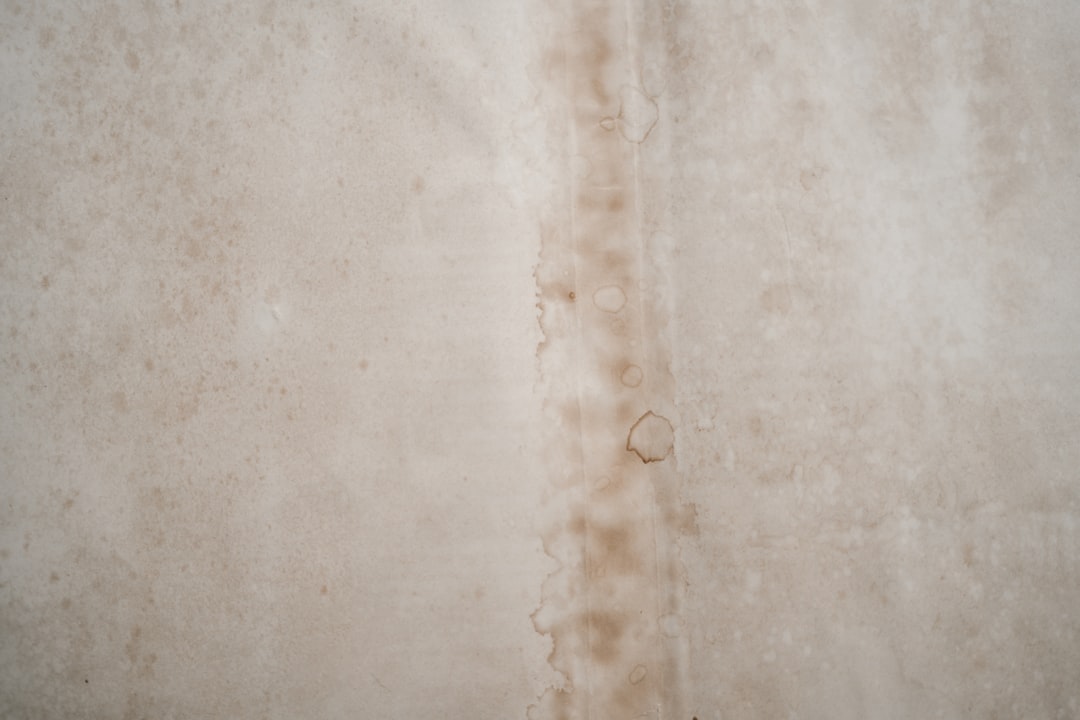
Most roof leaks announce themselves on the ceiling weeks or months before they become obvious problems, and most homeowners miss the early signs because they do not know what to look for. The yellow water stain on the ceiling everyone associates with leaks is actually the late-stage symptom — by the time you see it, water has been getting in for a while. This guide walks through the six earliest ceiling-visible signs of a roof leak, what each one means, and when each warrants calling a roofer.
Sign 1: Faint Yellow or Brown Halo Rings
The earliest ceiling-side sign of a roof leak is usually a faint circular discoloration — typically yellow, light brown, or tan — appearing as a ring or halo on the ceiling drywall. These rings form when water has seeped through the ceiling material slowly, depositing minerals as it dries between rain events.
The key word is faint. Most homeowners only notice these rings under specific lighting — usually morning or late afternoon sun coming through a window at an angle. Under direct overhead light, the rings often disappear into the ceiling texture entirely.
If you see a faint halo that you have not noticed before, photograph it under angled light, mark the date, and check it again after the next rain. If it darkens or grows even slightly, water is actively coming in.
Sign 2: A Soft Spot or Bulge in the Ceiling Surface
Active water accumulation behind the ceiling will eventually make the drywall sag. The earliest version of this is a soft spot — an area maybe six to twelve inches across where the ceiling surface gives slightly to gentle finger pressure. A more advanced version is a visible bulge or sag that you can see without touching.
Soft spots and bulges mean water is currently pooling above the ceiling, not just leaving residue. This is a substantially more urgent sign than discoloration — the water has volume, and the drywall is reaching its load limit. Untreated, a bulged ceiling eventually fails outright, releasing several gallons of water into the room below.
If you find a soft spot, do not press it harder to test how soft it is. That accelerates the failure. Call a roofer.
Sign 3: Peeling Paint or Bubbled Ceiling Texture
Ceiling paint and texture both depend on a dry substrate. When moisture comes through from above, paint loses adhesion and texture starts to bubble or flake. This often appears before any visible water stain because moisture saturates the paint layer before it concentrates enough to discolor.
Look at the ceiling near interior corners, around light fixtures, and along the wall-ceiling junction. These are the zones where water tends to migrate after entering the attic, and they show paint distress earliest.
Bubbled paint on an interior ceiling without an obvious cause (humidity, recent painting, etc.) almost always traces back to a roof leak. Roof leak detection services can pinpoint the source even when the visible damage is far from the actual entry point on the roof.
Sign 4: Water Stains Specifically Near Vents, Skylights, or Light Fixtures
Roof penetrations — vents, skylights, chimneys, attic fan housings — are the most common leak sources because they require flashing to seal and flashing fails first. Inside the home, the corresponding ceiling-side stain often appears directly underneath or slightly offset from these features.
A water stain on a ceiling that has a recessed light directly below a vent pipe is almost certainly a flashing failure at the vent. A stain near a skylight frame is almost certainly the skylight’s perimeter seal. A stain along the ceiling near a chimney is almost certainly the chimney flashing.
These specific patterns help diagnose where the leak originates on the roof before climbing up. They also matter for the urgency call — flashing failures tend to worsen quickly because the seal is already compromised.
Sign 5: A Musty or Damp Smell with No Obvious Source
Sometimes the visual signs are too subtle to spot, but the smell gives the leak away. Active moisture in attic insulation produces a distinctive damp, slightly musty smell that filters down through ceiling fixtures and light cans. The smell often appears before any visual sign of staining.
If a room smells damp or musty when the windows are closed, particularly after rain, the source is often above the ceiling rather than at floor level. Walk through the room slowly and try to isolate where the smell is strongest — it tends to concentrate directly under the leak source. Then check the ceiling in that zone under angled light for the early-stage signs above.
Sign 6: Dripping or Visible Water During Rain
The most urgent ceiling-side sign is also the most obvious: actual water coming through the ceiling during rain. By the time water is visible inside the home, the leak has progressed well beyond the early-warning phase, and damage is already accumulating in the attic, decking, and ceiling structure.
If you see active dripping:
- Place a container under the drip to catch water and protect the floor below
- Move furniture and electronics out of the drip zone immediately
- Photograph the location and the active drip — this documents the leak for insurance purposes
- Call for emergency roofing response if the rain is ongoing or significant damage is happening
Active dripping during a storm should be considered an emergency, not a “schedule next week” call. The longer water flows, the more it damages the structure between the roof and the ceiling.
What to Do When You Spot Any of These Signs
The right response depends on which sign you noticed and how progressed it is.
For early-stage signs (faint halos, slight discoloration, subtle smells): schedule an inspection in the next one to two weeks. The leak is not urgent yet, but it will not stop on its own, and an inspection while the damage is still minor keeps repair cost low.
For active-stage signs (soft spots, bulges, peeling paint, dripping): treat as urgent. Call a roofer the same day if possible. Insurance carriers also have notification windows for storm-related damage, and earlier reporting almost always supports cleaner claims.
For any sign that appeared after a storm: schedule a post-storm inspection regardless of severity. Even minor leaks that appeared after a hail or wind event may be the visible tip of broader storm damage that has not surfaced yet.
Frequently Asked Questions
Can a roof leak fix itself when the rain stops?
No. A roof leak does not heal — the water simply stops flowing when rain stops, but the entry point remains compromised. The leak will resume during the next significant rain event, often worse than before because each cycle damages the surrounding material more.
How long does it take for a small leak to become a major problem?
In Florida humidity, faster than most homeowners expect. A leak that produces a faint ceiling halo in May can produce active dripping by August and structural decking damage by the following spring. The progression is rarely linear — leaks tend to accelerate as the surrounding material weakens.
Can I just patch the ceiling and ignore the source?
You can, but the leak continues invisibly until the next ceiling failure, and damage to the decking and attic structure in between is doing the actual expensive work. Patching the ceiling without addressing the source converts a fixable problem into a delayed bigger one.
How accurate is roof leak detection from inside the home?
Surprisingly accurate. Water tends to travel from the roof entry point along structural elements (rafters, joists, ductwork) before dripping at a low point — so the ceiling-side stain is often several feet from the actual roof source. A roofer trained in leak detection traces the water path back to the entry point efficiently. Trying to guess from the outside is much harder than working backward from the visible interior sign.
Is a ceiling leak always from the roof?
Not always. Plumbing leaks in upper floors, HVAC condensation, and ice-dam-equivalent moisture in cold-snap conditions can produce similar ceiling stains. A proper inspection determines whether the source is the roof, plumbing, or HVAC before any repair starts.
Schedule a Leak Inspection Before the Damage Spreads
A ceiling stain you noticed today represents a leak that started weeks or months ago. The longer the gap between detection and repair, the more damage compounds in the attic, decking, and ceiling structure. Steel Rudder Roofing provides leak detection and inspection services across the Jacksonville metro — including Ponte Vedra, Mandarin, and Atlantic Beach. Contact us to schedule before the next rain.